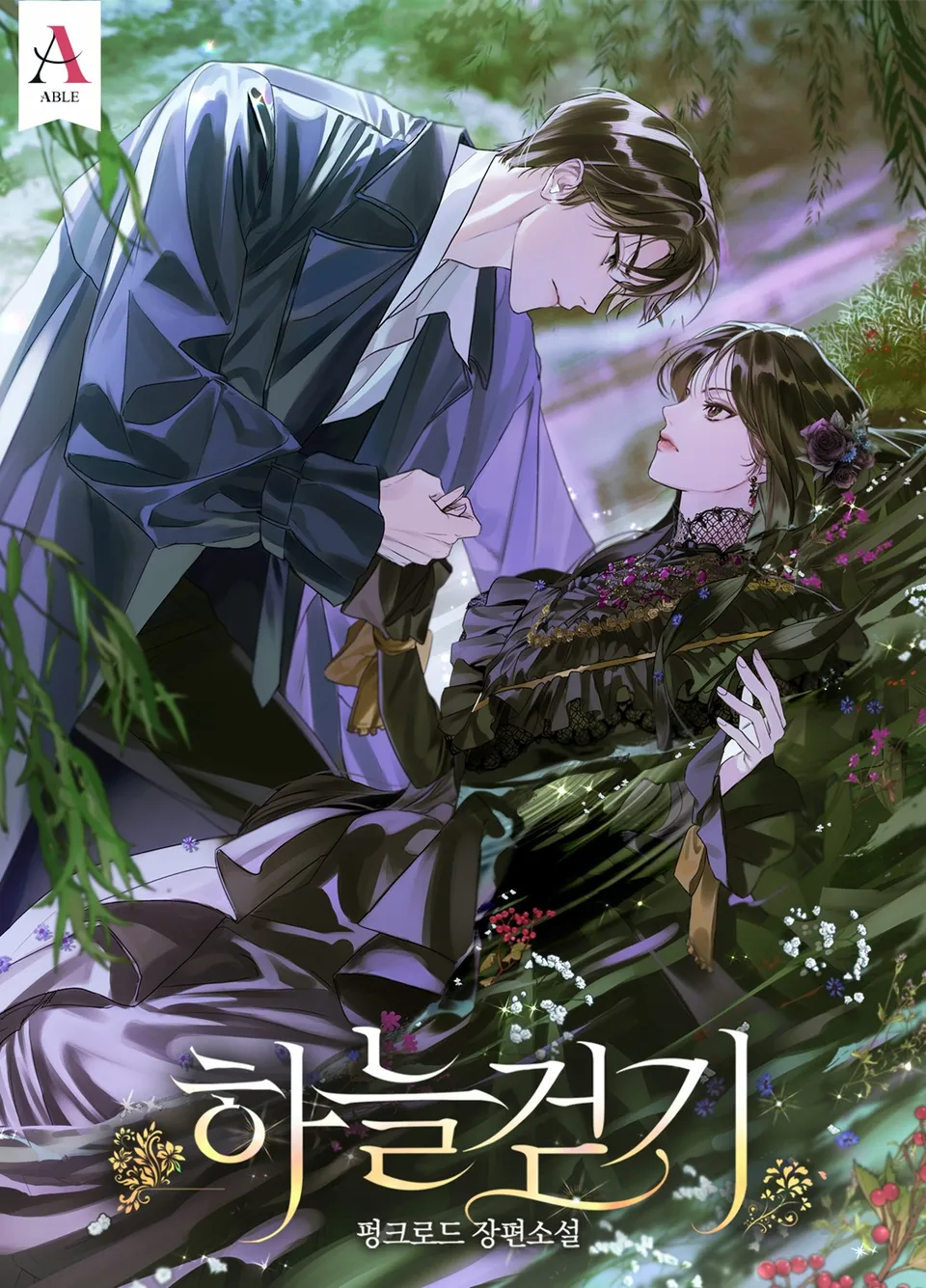
Chapter 01 …
Mozart in Joseon
Prologue
— In Wien —
“Maestro, do you have a moment?”
A staff member of the Vienna Court Theatre called out to Franz Xaver Süssmayr.
Süssmayr, who had been about to head home after the performance, broke into a pleasant smile.
“Of course. I was just looking for someone to drink wine with.”
“Another time. Someone wants to see you.”
Süssmayr hesitated for a moment.
“It’s an introduction from Duke Lichnowsky.”
Prince Karl Lichnowsky was known for providing generous patronage to Vienna’s musicians.
There was no refusing his request.
“I suppose I have no choice.”
Süssmayr began walking alongside the man.
“Who is it?”
“A foreigner. They say he’s come from very far away.”
“Why would someone like that want to see me?”
“He seems to have seen today’s performance. Isn’t it obvious? Probably wants to show off a little, act like he knows music. Just humor him as usual.”
Süssmayr let out a short chuckle.
He had seen countless nobles who wanted to flaunt their meager musical knowledge in front of real musicians.
Musicians played along, and in return received commissions or patronage.
“I’ll do my best.”
The man knocked twice and opened the drawing-room door.
As Süssmayr stepped inside, he was caught off guard.
The foreigner from a distant land was dressed in an outfit he had literally never seen before.
Even his features were unfamiliar, making Süssmayr wonder whether conversation would even be possible.
‘Is there an interpreter?’
He glanced around, but there were only the two of them in the room.
Then his eyes were drawn to the newspaper the foreigner was holding. It was the Wiener Zeitung, the Austrian official gazette.
‘Does he know German?’
The foreigner sat on a chair in front of the cembalo, absorbed in the paper.
Debating whether to announce his presence, Süssmayr decided to wait and quietly observe him.
Strangely, the man was wearing a hat indoors. It was made of a translucent material, a shape Süssmayr had never seen anywhere in Europe.
His coat was even more striking. It reached almost to his ankles, and the sleeves were so wide they seemed to drape downward.
The fabric was a cobalt blue rarer than gold, embroidered with exquisite detail. At a glance, Süssmayr could tell this was no ordinary man.
‘If he was introduced by Duke Lichnowsky, that explains it.’
He must be of high status in his own country.
Though Süssmayr disliked being summoned only to find the man reading a newspaper, he also thought it unwise to needlessly offend a noble.
After some time passed, the foreigner finally lowered the paper.
The article printed on the table caught Süssmayr’s eye.
[Obituary]
Imperial Chamber Composer Wolfgang Gottlieb Mozart passed away on December 5.
Wolfgang Mozart rose to fame from childhood due to his exceptional talent, and with The Marriage of Figaro, Don Giovanni, and The Magic Flute, he ascended to the ranks of the great masters.
With his death, Europe has suffered an irreplaceable loss.
— Wiener Zeitung, 1791.12.07.
It was the article published when his teacher, Wolfgang Gottlieb Mozart, had died.
Wondering why a foreigner would be reading a newspaper from three years ago, Süssmayr lifted his head.
“I enjoyed the performance.”
The foreigner spoke in German. Not merely fluent—his speech was so natural one could mistake him for a native.
“I am Franz Xaver Süssmayr, Kapellmeister of the Vienna Court Theatre. Thank you.”
Süssmayr offered a greeting.
“To be appointed Kapellmeister at such a young age—impressive. Are you writing operas as well?”
“Yes.”
The foreigner nodded in satisfaction.
“There are a few things I wish to ask.”
“I will answer as best I can.”
“I am looking for Wolfgang Mozart’s grave, but no one seems to know.”
“How do you know my teacher?”
“He was an extraordinary figure. His reputation reached even my distant homeland, and I admired him greatly.”
“Ah.”
“Tell me. What happened after his death?”
“……”
“What troubles you?”
“I’m sorry, but I do not wish to speak of my late teacher’s affairs as mere curiosities.”
Süssmayr replied, visibly tense.
The foreigner stroked his beard and gave a short laugh.
“When I was young, I noticed only the differences, but it seems there is Sohak here as well.”¹)
“Pardon?”
The foreigner closed his eyes briefly, lost in thought. Then he turned and placed his hands on the cembalo.
A long silence settled over the room, before the foreigner pressed the keys as if sighing.
Mozart
Piano Sonata No. 14 in C minor
III. Allegro assai
Fragmented staccatos fell like rain.
The window that once leaked lamplight was tightly shut.
With every violent gust that battered the window, unease deepened.
The man left alone in the square looked around.
Only a single unfamiliar inn kept its lantern lit.
Hurrying inside to take shelter, the man climbed the stairs.
Ascending arpeggios.
Ragged breaths.
Reaching the room, the man barely regained his composure and opened the door.
Beyond the musty, mold-scented room, the view through the window was thick with darkness.
Fierce passages swept through like a gale, and powerful octaves struck the window.
Faced with the cold and darkness of an unfamiliar foreign land, the man could only wait, unable to take even a single step.
Thunder crashed, followed by silence.
The foreigner slowly lifted his head, as if savoring the sound that lingered in the air.
“……”
Süssmayr found himself unable to speak.
He had heard Mozart’s Fourteenth Sonata countless times, but never an interpretation this heartrending.
He could not even be certain that his teacher, Mozart himself returned to life, could perform it like this.
The foreigner slowly turned his head.
“I have traveled a very long road to mourn his death.”
He spoke quietly.
“This is not idle curiosity.”
His eyes did not waver in the slightest.
Süssmayr was overwhelmed with confusion.
Who was this man? How did he know his teacher? How could he play the cembalo like that?
Questions swirled endlessly.
Yet the gravity of his demeanor was undeniable, proven by the performance he had just witnessed.
“I know well of his renown. That he lies in a place with no tomb, no gravestone—where no one knows where he is buried—this situation is utterly unacceptable to me.”
“……”
“And you—are you truly unmoved by this?”
Süssmayr let out a long breath.
He, too, had long harbored doubts regarding his teacher’s funeral.
“The funeral was held at St. Stephen’s Cathedral.”
After much deliberation, Süssmayr finally spoke.
“As expected. What puzzles me is that there is no gravestone for Mozart anywhere in St. Marx Cemetery.”
Süssmayr feigned surprise.
He had not expected the foreigner to know the burial procedures of St. Stephen’s Cathedral.
Judging by his skill at the cembalo, his natural German, and his knowledge of Vienna’s funeral customs, it was clear the foreigner had spent considerable time in Vienna.
“It was a third-class funeral.”
This time, the foreigner was the one surprised.
According to Vienna city regulations, funerals at St. Stephen’s Cathedral were divided into three classes.
First class was reserved for nobles and some influential bourgeois families.
Second class was for well-to-do citizens.
Third class was conducted without a private grave or gravestone and, aside from funerals for the destitute managed by the church, was the cheapest option.
The cost was a mere 11 florins and 56 kreuzer.²)
It was unimaginable for the funeral of Wolfgang Mozart, the master who had shaken Europe.
“Mozart’s circumstances couldn’t have been that dire.”
“It was Baron van Swieten’s suggestion.”
“He was on the funeral committee?”
“Yes. Taking my teacher’s family situation into account, he proposed a third-class funeral.”
“And what did Mozart’s wife say?”
“She was unable to do anything regarding the funeral.”
“What do you mean?”
“On the day my teacher passed away, she collapsed as if unconscious. Baron van Swieten sent her and the two children to Bauernfeind’s house to rest. Later, they moved to Gothan’s house.”
“Gothan?”
The foreigner asked, puzzled.
Bauernfeind was a fellow Freemason like Mozart.
Gothan, however, was different—a nasty moneylender who flattered Mozart to his face but slandered him behind his back.
“Are you saying Mozart’s wife stayed at that man’s house?”
“Yes. I do not know the reason.”
“……Continue.”
“After sending her away, Baron van Swieten applied for a third-class funeral with the cathedral.”
The foreigner narrowed his eyes.
Excluding the widow from the funeral and immediately applying for a third-class burial on the very day of Mozart’s death—it was hard to believe.
“Baron van Swieten was very close to Mozart.”
The foreigner said.
“Though many could not accept it, that is true.”
“……What was the funeral day like?”
“The funeral mass began around 3 p.m. on December 7. It was a private mass attended by sixteen people, with no orchestra. The widow was absent as well, due to illness.”
The foreigner closed his eyes.
“When night fell, laborers loaded my teacher’s coffin onto a cart. Myself, Freystädtler, and Hartwig—ah, all of us were his students.”
The foreigner nodded.
“We followed, but the weather was terrible and the hearse moved too quickly, so we could not accompany it to the end.”
“Then only the laborer knows where Mozart was buried.”
“There was also an assistant. When we later asked where he had buried my teacher, he said he couldn’t remember.”
The foreigner shut his eyes tightly.
“Actually…”
After a long silence, Süssmayr spoke again.
“Baron van Swieten may also have been in turmoil.”
The foreigner opened his eyes and fixed his gaze on Süssmayr.
“On the day my teacher passed away, the baron was dismissed from his position as Imperial Librarian.”
“That differs from what I heard from Duke Lichnowsky. He should still be the Imperial Librarian.”
“He was reinstated about a year later.”
“Reinstated?”
The foreigner frowned.
Baron van Swieten was an Enlightenment thinker who actively associated with the Freemasons.
He stood in opposition to the emperor, who pursued strong imperial authority.
How such a man could return to the post of Imperial Librarian was puzzling.
The foreigner stood up.
“I expect we will meet often. If you have business, come to Belvedere Palace.”
“Belvedere Palace…?”
It was the palace reserved for foreign envoys.
“Seek out the Joseon Kingdom delegation and show them this. They will treat you with courtesy.”
The foreigner handed over a neatly folded paper.
As Süssmayr accepted it in a daze, the foreigner suddenly grasped his hand.
Startled, Süssmayr looked up, only to see the man grin broadly.
“My introduction was late. I am Moga Chaedo.”
¹) Sohak (小學):
A Confucian teaching.
“When the teacher’s Way is lofty and strict, the disciple must rightly respect and obey.”
²) Roughly equivalent to about 250,000 KRW in today’s value.
Source: Lee Chae-hoon, Mozart: A Critical Biography, Hyeda, 2023.